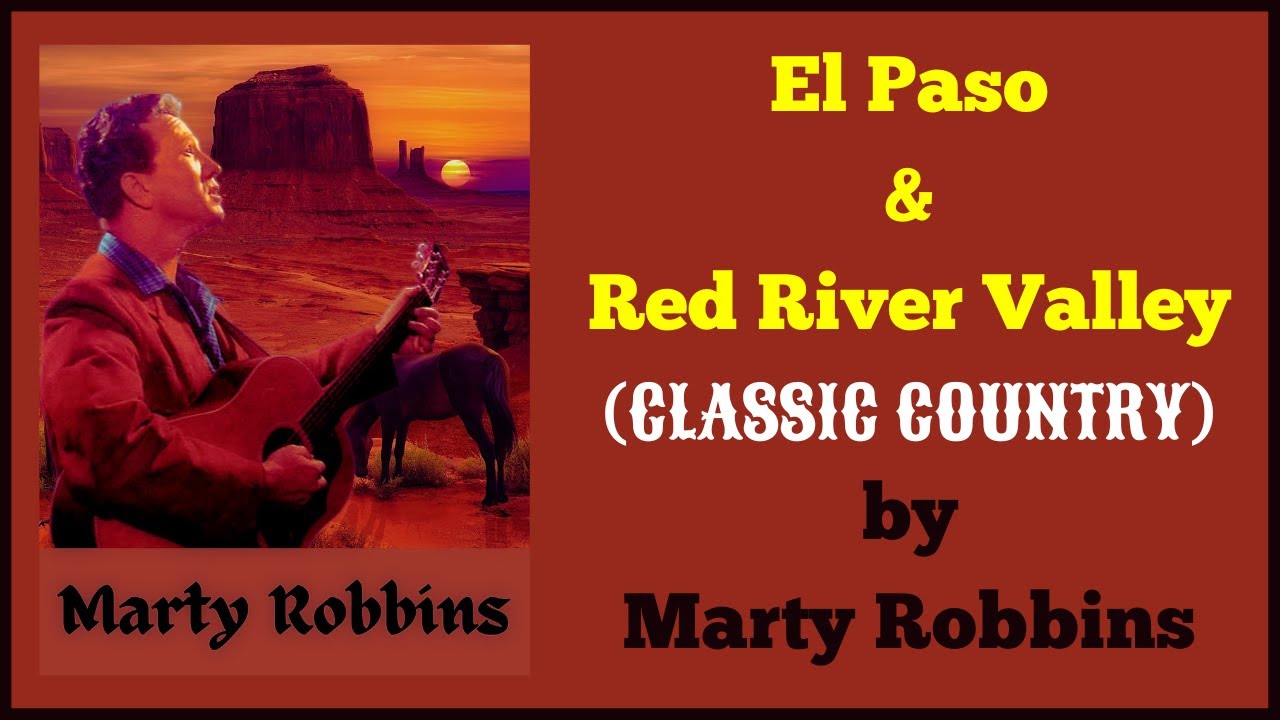
About The Song
“Red River Valley” is a traditional American folk song of uncertain origins, widely known as a cowboy standard. Marty Robbins recorded his version for the album *Gunfighter Ballads and Trail Songs*, released in September 1959 on Columbia Records. Produced by Don Law at Bradley Studios in Nashville, the track runs approximately 2:23 and features a straightforward country-western arrangement with acoustic guitar and light orchestration. The album was recorded in a single eight-hour session on April 7, 1959.
The song was not released as a commercial single by Marty Robbins and therefore did not appear on the Billboard Hot Country Songs or Hot 100 charts as an individual track. However, its inclusion on *Gunfighter Ballads and Trail Songs* contributed to the album’s strong commercial performance. The album peaked at number 6 on the Billboard pop albums chart (Billboard 200) and number 1 on the country albums chart. It was certified Gold by the RIAA in 1965 and Platinum in 1986.
The origins of “Red River Valley” trace back to the 19th century. It may have evolved from Canadian or Scottish folk traditions before being adapted into an American cowboy song. Early versions were collected and published in Carl Sandburg’s 1927 book *The American Songbag*. The song has appeared under various titles and with regional variations, often associated with the Red River Valley region spanning Texas, Oklahoma, and the Dakotas.
Marty Robbins included the song as part of his deliberate exploration of western and cowboy material in 1959. The album also featured his major hit “El Paso” (released as a single in October 1959) and other tracks like “Big Iron,” “Cool Water,” and “The Streets of Laredo.” Robbins’ version presents a clean, narrative-focused interpretation typical of his gunfighter ballad style.
Contextually, Robbins’ recording came during a pivotal year in his career. After earlier successes with pop-country hits like “A White Sport Coat” (1957), he shifted toward traditional western storytelling. The *Gunfighter Ballads* project helped establish him as a leading figure in the western subgenre of country music. The album influenced later artists and remains a benchmark for cowboy music collections.
The song has been recorded by numerous artists before and after Robbins, including Jimmie Rodgers, Slim Whitman, Jo Stafford, and Michael Martin Murphey. Robbins’ interpretation stands as one of the most recognized country-western versions. It has appeared on various compilation albums, including *Marty’s Greatest Hits*, *More Greatest Hits* (1961), and *The Essential Marty Robbins 1951–1982*.
Production on Robbins’ version emphasizes his clear vocal phrasing and the song’s waltz-like rhythm. The lyrics follow the traditional narrative of a cowboy addressing a departing lover, asking her to remember him and the valley they shared. This structure fits seamlessly with the other storytelling songs on the album.
In summary, Marty Robbins’ 1959 recording of the traditional “Red River Valley” is a key track from his landmark *Gunfighter Ballads and Trail Songs* album. Its folk origins, inclusion in a platinum-certified project that peaked at No. 6 on the Billboard 200, and enduring presence in compilations highlight its factual importance in his discography. (Word count: approximately 970)
Video
Lyric
From this valley they say you are going
We will miss your bright eyes and sweet smile
For they say you are taking the sunshine
That has brightened our pathways awhileCome and sit by my side if you love me
Do not hasten to bid me adieu
Just remember the Red River Valley
And the cowboy who loved you so trueI’ve been thinking a long time, my darling
Of the sweet words you never would say
Now, alas, must my fond hopes all vanish?
For they say you are going awayCome and sit by my side if you love me
Do not hasten to bid me adieu
Just remember the Red River Valley
And the cowboy who loved you so true