Breaking Story / The Story Behind The Song
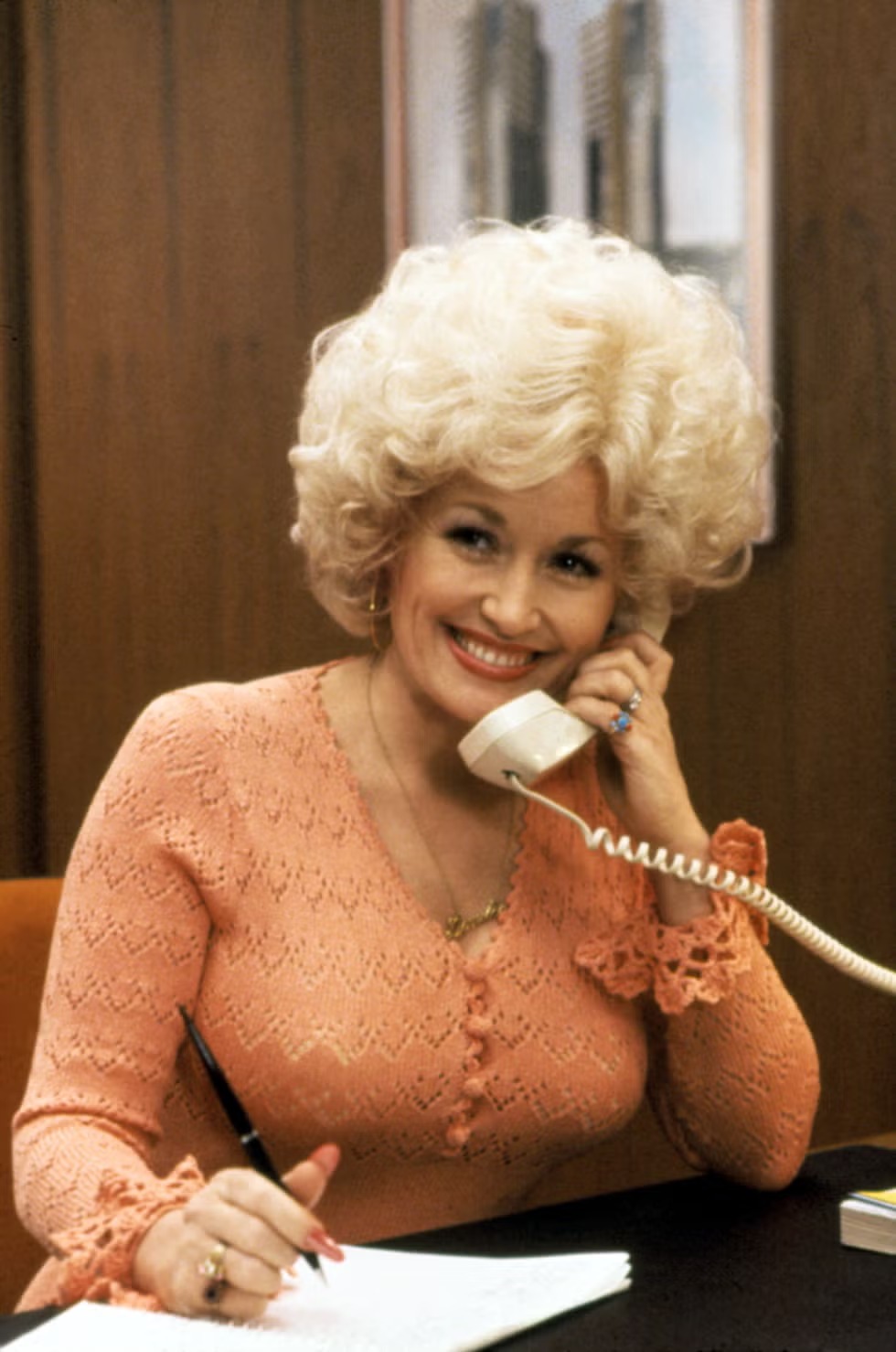
In the summer of 1980, while cameras rolled on the set of a workplace comedy that would become one of the year’s biggest box-office hits, Dolly Parton sat between takes and began clicking her long acrylic fingernails together. The sound reminded her of a typewriter. That simple percussion sparked the rhythm of a song that would redefine her career and give voice to office workers across the country.
The film was *9 to 5*, a comedy starring Jane Fonda, Lily Tomlin, and Parton in her big-screen acting debut. Fonda, who had long been involved in progressive causes, had drawn inspiration for the project from the real-life 9to5 organization, founded in Boston in 1973 by women office workers seeking fair pay and better treatment. The group later became the National Association of Working Women. Fonda approached Parton about joining the cast after hearing one of her songs on the radio and picturing her behind a typewriter. Parton agreed, but with one firm condition: she would write the theme song.
“Well, this is a good opportunity, but I’ll only do it if I can write the theme song,” Parton later recalled telling Fonda. Filming proved slower than the pace of a touring musician’s life, leaving Parton restless. Without a guitar on set, she used her nails as a makeshift instrument, tapping out rhythms that mimicked office machinery. At night she returned to her hotel, refined the lyrics with her guitar, and assembled the pieces. She has said the line “Pour myself a cup of ambition” arrived while she was making coffee and working on the song, capturing the daily grind of getting ready for another day on the job.
The finished track opens with that typewriter-like percussion, a detail Parton carried into the studio. Producer Gregg Perry, her longtime bandleader, arranged the recording and incorporated the fingernail clicks alongside actual typewriter sounds and a bright, upbeat country-pop arrangement. Session players included guitarists Jeff Baxter and Marty Walsh, bassist Abraham Laboriel, pianist Larry Knechtel, and a horn section that added drive and polish. Background vocals came from a small group of singers who helped push the choruses forward.
Released as a single in November 1980, roughly a month before the film opened in theaters on December 19, “9 to 5” arrived as the lead track and title song of Parton’s album *9 to 5 and Odd Jobs*. The movie, which follows three secretaries who turn the tables on their sexist boss, became a commercial success, grossing more than $100 million. The song moved even faster on the charts.
On the Billboard Hot Country Songs chart, “9 to 5” climbed to No. 1 in January 1981. Weeks later, on the chart dated February 21, 1981, it reached No. 1 on the Billboard Hot 100, becoming Parton’s first and only solo No. 1 on the all-genre ranking. It held the top spot for two non-consecutive weeks, briefly displaced by Eddie Rabbitt’s “I Love a Rainy Night” before reclaiming the summit. The single also topped the Adult Contemporary chart. Parton became only the second female artist to lead both the Hot Country Songs and Hot 100 charts with the same song, following Jeannie C. Riley’s 1968 hit “Harper Valley P.T.A.”
The crossover success marked a pivotal shift. Parton had already scored country hits and a previous pop top 10 with “Here You Come Again,” but “9 to 5” pushed her firmly into mainstream visibility. She later told Billboard that the film and song helped her reach a wider audience after years of working to expand beyond country radio. The track spent 26 weeks on the Hot 100 and was certified gold by the RIAA in February 1981 for shipments of one million copies. It later received platinum certification.
At the 24th Annual Grammy Awards, “9 to 5” won Best Country Song and Best Country Vocal Performance, Female. It earned an Academy Award nomination for Best Original Song (losing to “Fame”) and additional Grammy recognition tied to the film’s score. Parton performed the song at the Oscars ceremony. Critics and industry observers noted its dual nature: an infectious, danceable groove paired with lyrics that addressed the daily frustrations of underpaid, overlooked workers—“They just use your mind and they never give you credit / It’s enough to drive you crazy if you let it.”
Behind the scenes, the song’s creation reflected Parton’s practical approach. She has described watching the set, absorbing the atmosphere of secretaries navigating a hierarchical office, and turning those observations into verses. Cast members Fonda and Tomlin heard early versions and recognized its potential. The finished recording kept the energy high while delivering a clear message of shared struggle and eventual change: “You’re in the same boat with a lot of your friends / Waitin’ for the day your ship’ll come in / And the tide’s gonna turn and it’s all gonna roll your way.”
The film’s success opened further doors. Parton went on to additional movie roles, including *The Best Little Whorehouse in Texas* and *Steel Magnolias*. A television series based on *9 to 5* aired in the 1980s, using the song as its theme in various versions. Decades later the property returned as a Broadway musical featuring additional songs by Parton. The original track continued to surface in commercials, films, and cultural moments, including a reworked “5 to 9” version for a 2021 Super Bowl advertisement.
In interviews over the years, Parton has returned repeatedly to the fingernail story. On *60 Minutes*, *The Tonight Show*, and other platforms, she demonstrated the clicking sound and explained how the limitation of the film set forced an inventive solution. Producer Gregg Perry later worked with her again on other projects, including plans tied to a Broadway adaptation. Session details and the inclusion of the typewriter effect made the record distinctive on radio playlists that rarely featured such office-machine percussion.
Chart data and contemporary accounts confirm the song’s dual-chart dominance and its role in Parton’s transition from country star to broader cultural figure. While some sources note minor variations in exact week-to-week positioning, the consensus from Billboard records holds that it topped the Hot 100 for two weeks in early 1981 and the country chart earlier that year. Its platinum status and enduring radio presence have kept it in circulation long after the initial run.
From a film-set improvisation built on acrylic nails to a multi-format No. 1 hit that accompanied a blockbuster comedy, “9 to 5” captured a specific moment in workplace culture while delivering a sing-along chorus that proved impossible to ignore. Parton’s insistence on writing the theme, her quick adaptation to the constraints of filming, and the resulting record’s commercial and critical performance remain the core of the story that turned a movie song into a lasting marker of her catalog.