
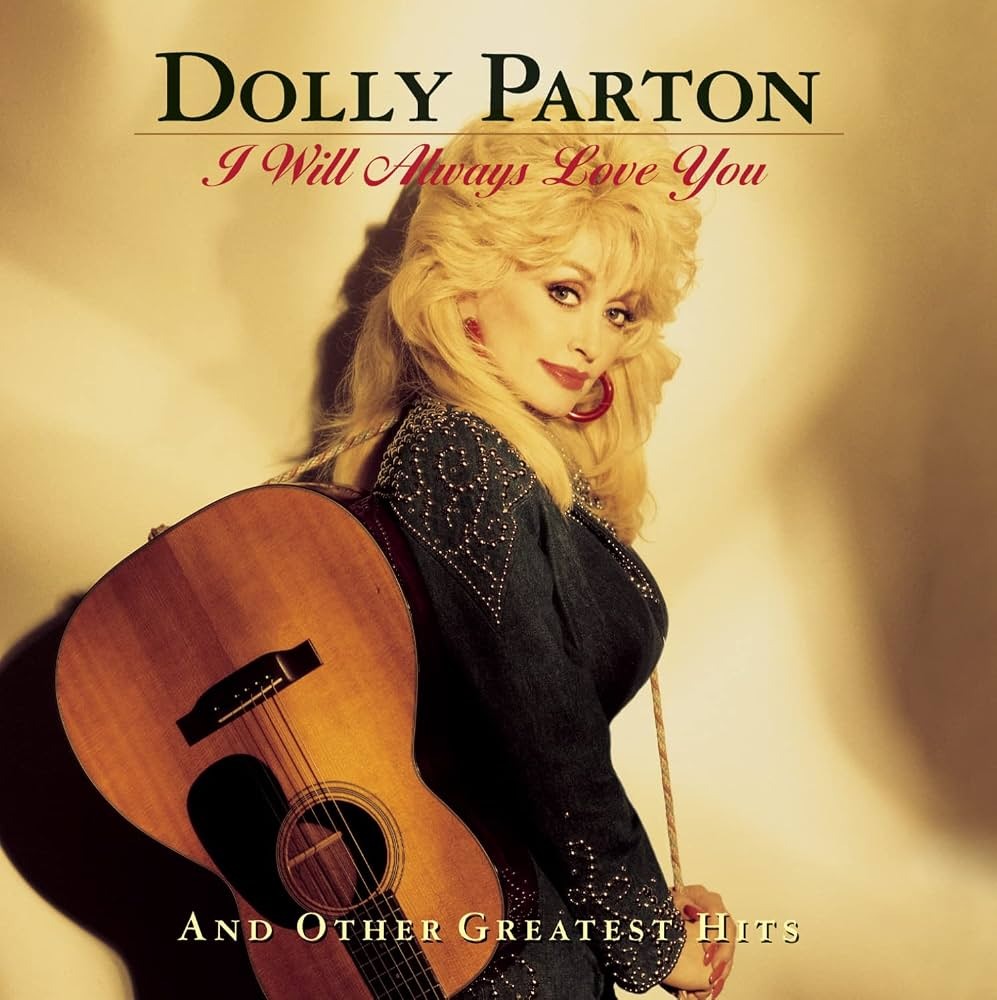
About The Song
“I Will Always Love You” is a song written and originally recorded by American singer-songwriter Dolly Parton. She composed the track in 1973 and recorded it on June 12, 1973, at RCA Studio B in Nashville, Tennessee. The song was released as a single in March 1974 by RCA Victor, serving as the second single from Parton’s thirteenth solo studio album, Jolene, which was issued the same year. The original recording runs approximately 2 minutes and 54 seconds in length and falls within the country genre. Production was handled by Bob Ferguson. The B-side of the single was “Lonely Comin’ Down.”
Parton wrote the song as a professional farewell to her longtime business partner and mentor, Porter Wagoner. The two had collaborated closely since 1967, when Wagoner invited Parton to join his television program, The Porter Wagoner Show. Their partnership included numerous duet recordings and television appearances over a seven-year period. By 1973, Parton had decided to pursue a full solo career and end the professional association. She has stated that she wrote the song to communicate her decision and express appreciation for the collaboration. Parton has also noted that she composed “Jolene” around the same time, with early demo versions of both songs appearing on the same cassette tape; the tracks may have been written on the same day or a few days apart.
The following morning after writing the song, Parton performed it for Wagoner in his office. He responded positively to the composition and agreed to the professional split on the condition that he produce the recording of the track. The pair formally announced the end of their partnership the following year. The song reached number one on the Billboard Hot Country Songs chart on June 8, 1974. It also peaked at number four on the Canadian RPM Country Tracks chart. The track ranked at number 22 on the Billboard year-end Hot Country Songs chart for 1974. This success formed part of a sequence of consecutive number-one country hits for Parton as a solo artist.
Following the original release, Elvis Presley expressed interest in recording a version of the song. Parton initially considered the opportunity, but Presley’s manager, Colonel Tom Parker, required that half of the publishing rights be assigned to Presley as a standard condition for any song he recorded. Parton declined the arrangement and retained full publishing ownership. She later reflected on the decision in interviews, noting that it preserved her rights to the composition.
In 1982, Parton re-recorded the song for the soundtrack of the film The Best Little Whorehouse in Texas, in which she starred alongside Burt Reynolds. This version was released as a single on July 12, 1982, and again reached number one on the Billboard Hot Country Songs chart. The re-recording also crossed over to the pop charts, peaking at number 53 on the Billboard Hot 100, number 17 on the Adult Contemporary chart, and achieving additional placements internationally, including number 1 on the Canadian RPM Country Tracks and Adult Contemporary charts, number 2 in the Netherlands, and number 4 in Belgium. This marked the first instance of an artist reaching number one twice on the country chart with the same song performed by the same vocalist. The 1982 version received certifications including Platinum in the United States by the RIAA and Gold or higher in several other territories based on sales and streaming figures.
A third recording by Parton, this time a duet with Vince Gill, appeared on her 1995 album Something Special. The collaboration received unsolicited radio airplay after a live performance and was formally released as a single in November 1995. It peaked at number 15 on the Billboard Hot Country Singles & Tracks chart and number 22 on the Canadian RPM Country Tracks chart. The duet earned a nomination for Best Country Collaboration with Vocals at the 38th Annual Grammy Awards and won Vocal Event of the Year at the 30th Annual CMA Awards.
In 1992, Whitney Houston recorded a pop and R&B-influenced arrangement of the song for the soundtrack of the film The Bodyguard. The track was selected after earlier consideration of other material; Kevin Costner, a producer and co-star of the film, had expressed interest in including Parton’s composition. Parton has recounted that Costner and his team contacted her regarding its use. Houston’s version, released as a single on November 2, 1992, by Arista Records, spent 14 consecutive weeks at number one on the Billboard Hot 100, setting a record at the time for the longest run at the top by a solo artist. It also topped charts in numerous countries, including 10 weeks in the United Kingdom (where it was the best-selling single of 1992), and reached number one in at least 34 official singles charts worldwide. Global sales exceeded 20 million copies according to multiple reports, establishing it as the best-selling single by a female solo artist. The recording earned Houston the Grammy Awards for Record of the Year and Best Pop Vocal Performance, Female in 1994, among other honors. It has received multi-platinum and diamond certifications in various markets, including 11x Platinum or higher from the RIAA in later tallies reflecting sales and streaming equivalents.
Because Parton retained the publishing rights, she received substantial royalties from Houston’s version and subsequent uses. Reports indicate earnings in the range of approximately $10 million from the Houston recording during the 1990s alone. The song has accumulated millions of broadcast performances, as recognized by BMI. Other notable covers include a 1975 version by Linda Ronstadt on the album Prisoner in Disguise, as well as recordings by Kenny Rogers, LeAnn Rimes, and additional artists across genres.
The original 1974 recording entered the Billboard Hot 100 for the first time in September 2026, debuting at number 27 on the chart dated September 5, 2026. This occurred following increased streaming and sales activity. The song has appeared in various media contexts over the decades, including a background use in the 1974 film Alice Doesn’t Live Here Anymore, though it was not included on that film’s official soundtrack. Parton has performed the song live on multiple occasions, including a notable appearance at the Grand Ole Opry in 2007 during a celebration of Porter Wagoner’s 50 years as a member, where she dedicated the performance to him.
Personnel on the original recording included Dolly Parton on vocals and guitar, Jimmy Colvard and Chip Young on guitar, Stu Basore on pedal steel guitar, Bobby Dyson on bass, Larrie Londin on drums, Buck Trent and Bobby Thompson on banjo, Mack Magaha and Johnny Gimble on fiddle, Hargus “Pig” Robbins on piano, and background vocals by Dolores Edgin, Hershel Wiginton, Joe Babcock, and June Page. The composition is set in common time with a tempo of approximately 66 beats per minute.
Across its various versions and covers, “I Will Always Love You” has generated significant commercial performance metrics for Parton as both writer and performer. The original and re-recorded Parton versions each topped the country charts, the Houston version achieved global number-one status and multi-million sales, and the song continues to register on contemporary charts through streaming and catalog activity. Certifications, chart peaks, and sales figures documented by Billboard, the RIAA, and international bodies confirm its sustained commercial presence from the 1970s through the 2020s.
Video
Lyric
If I should stay
I would only be in your way
So I'll go, but I know
I'll think of you each step of the way

And I will always love you
I will always love you

Bittersweet memories
That's all I am taking with me
Goodbye, please don't cry
We both know that I'm not what you need

But I will always love you
I will always love you

I hope life treats you kind
And I hope that you have all that you ever dreamed of
And I wish you joy and happiness
But above all of this, I wish you love

And I will always love you
I will always love you
I will always love you