About The Song
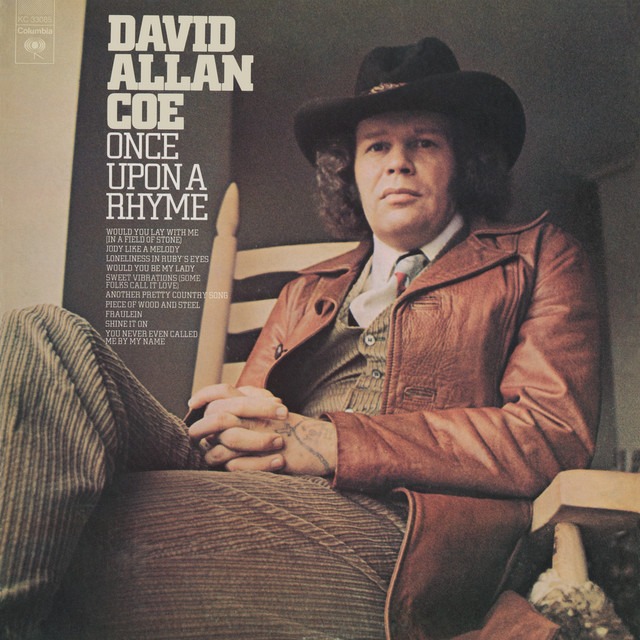
“You Never Even Called Me by My Name” is a country song written by Steve Goodman with an uncredited contribution from John Prine. Goodman first recorded and released the track on his self-titled debut album in 1971. The song later gained widespread recognition through David Allan Coe’s version, which appeared on his fourth studio album, Once Upon a Rhyme, issued by Columbia Records in June 1975. Coe’s recording was released as a single in June 1975 and became his first Top 10 country hit.
The composition originated in 1971 while Goodman and Prine were in New York City. The pair had recently signed recording contracts and were staying in a luxury suite at the Waldorf-Astoria Hotel that belonged to Paul Anka, who was then associated with their management. Prine later recounted that Goodman was working on lyrics when Prine returned to the suite. After examining the existing lines, the two expanded the song into a style parody of conventional country tropes. Prine requested that his name be omitted from the official songwriting credits because he regarded the piece as a novelty song and preferred not to be publicly associated with it in the country music community at the time. Goodman received the sole writing credit on both his own recording and Coe’s later version. Goodman later used a portion of the royalties from Coe’s hit to purchase a 1942 Wurlitzer jukebox for Prine as compensation for his contribution.
Goodman’s original 1971 recording received limited attention. Coe recorded his version on August 20, 1974, at Columbia Studio A in Nashville. The session featured session musicians including Hargus “Pig” Robbins on piano, Pete Drake on resonator and steel guitar, and other established Nashville players. Ron Bledsoe produced the track. The finished recording runs 5 minutes and 16 seconds and is built around resonator guitar, pedal steel, electric guitar, and bass.
Coe’s single entered the Billboard Hot Country Singles chart in July 1975. It spent 17 consecutive weeks on the chart and peaked at number 8. On the Canadian RPM Country Tracks chart it reached number 4. At year-end 1975 it ranked number 25 on Billboard’s Hot Country Songs tally. The single was the third release of Coe’s career and marked his commercial breakthrough on the country charts. The B-side was Coe’s own composition “Would You Lay with Me (In a Field of Stone).”
The lyrics function as a self-aware pastiche of country music conventions. The second verse name-checks Waylon Jennings, Charley Pride, and Merle Haggard (with a reference to Haggard’s “The Fightin’ Side of Me”), and Coe delivers approximate vocal impressions of each artist. A background vocal allusion to Faron Young’s “Hello Walls” also appears. The third verse includes Coe’s own name in a line about hearing it only on Judgment Day. The song is best known for its spoken-word bridge, in which Coe describes correspondence with Goodman. Goodman had told Coe the song was the perfect country and western song. Coe replied that it lacked references to mama, trains, trucks, prison, or getting drunk. Goodman then supplied an additional verse incorporating all five elements. Coe included that verse on the finished recording and identified it in the spoken section as completing the song.
The final verse runs: “Well, I was drunk the day my mom got out of prison / And I went to pick her up in the rain / But before I could get to the station in my pickup truck / She got run over by a damned old train.” This section is performed after the spoken explanation and is followed by a final chorus variation.
Once Upon a Rhyme itself reached number 8 on the Billboard Top Country Albums chart. The album also contained Coe’s recording of “Would You Lay with Me (In a Field of Stone),” a song he had written that Tanya Tucker had taken to number 1 the previous year. Coe’s version of “You Never Even Called Me by My Name” established the track as a staple of his live performances and a recognized entry in the outlaw country catalog of the mid-1970s.
In 1994 Doug Supernaw recorded a cover for his album Deep Thoughts from a Shallow Mind. That version featured guest appearances by Coe, Waylon Jennings, Merle Haggard, and Charley Pride and peaked at number 60 on the Billboard Hot Country Songs chart. The original Coe recording has continued to appear on retrospective compilations and has been cited in later rankings of notable country songs, including placement at number 160 on Rolling Stone’s list of the 200 greatest country songs.
The song’s structure combines three narrative verses, repeated choruses, a spoken interlude, and the added final verse. Instrumentation remains sparse and acoustic-leaning relative to mainstream Nashville productions of the period, consistent with the outlaw country aesthetic associated with Coe’s mid-1970s Columbia recordings. The track remains Coe’s highest-charting single from the 1970s and one of the recordings most closely identified with his early commercial success.
Video
Lyric
Well, it was all that I could do to keep from cryin’
Sometimes it seemed so useless to remain
But you don’t have to call me darlin’, darlin’
You never even call me by my name
You don’t have to call me Waylon Jennings
And you don’t have to call me Charlie Pride
And you don’t have to call me Merle Haggard anymore
Even though you’re on my fightin’ side
And I’ll hang around as long as you will let me
And I never minded standin’ in the rain
But you don’t have to call me darlin’, darlin’
You never even call me by my name
Well, I’ve heard my name a few times in your phone book (Hello, hello)
And I’ve seen it on signs where I’ve played
But the only time I know I’ll hear “David Allan Coe”
Is when Jesus has his final judgment day
So I’ll hang around as long as you will let me
And I never minded standin’ in the rain
But you don’t have to call me darlin’, darlin’
You never even call me by my name
Well, a friend of mine named Steve Goodman wrote that song
And he told me it was the perfect country and western song
I wrote him back a letter, and I told him it was not the perfect country and western song
Because he hadn’t said anything at all about Mama, or trains, or trucks, or prison, or gettin’ drunk
Well, he sat down and wrote another verse to the song and he sent it to me
And after reading it, I realized that my friend had written the perfect country and western song
And I felt obliged to include it on this album
The last verse goes like this here
Well, I was drunk the day my mom got out of prison
And I went to pick her up in the rain
But before I could get to the station in my pickup truck
She got run over by a damned old train
And I’ll hang around as long as you will let me
And I never minded standin’ in the rain
No, you don’t have to call me darlin’, darlin’
You never even call me
Well, I wonder why you don’t call me
Why don’t you ever call me by my name?