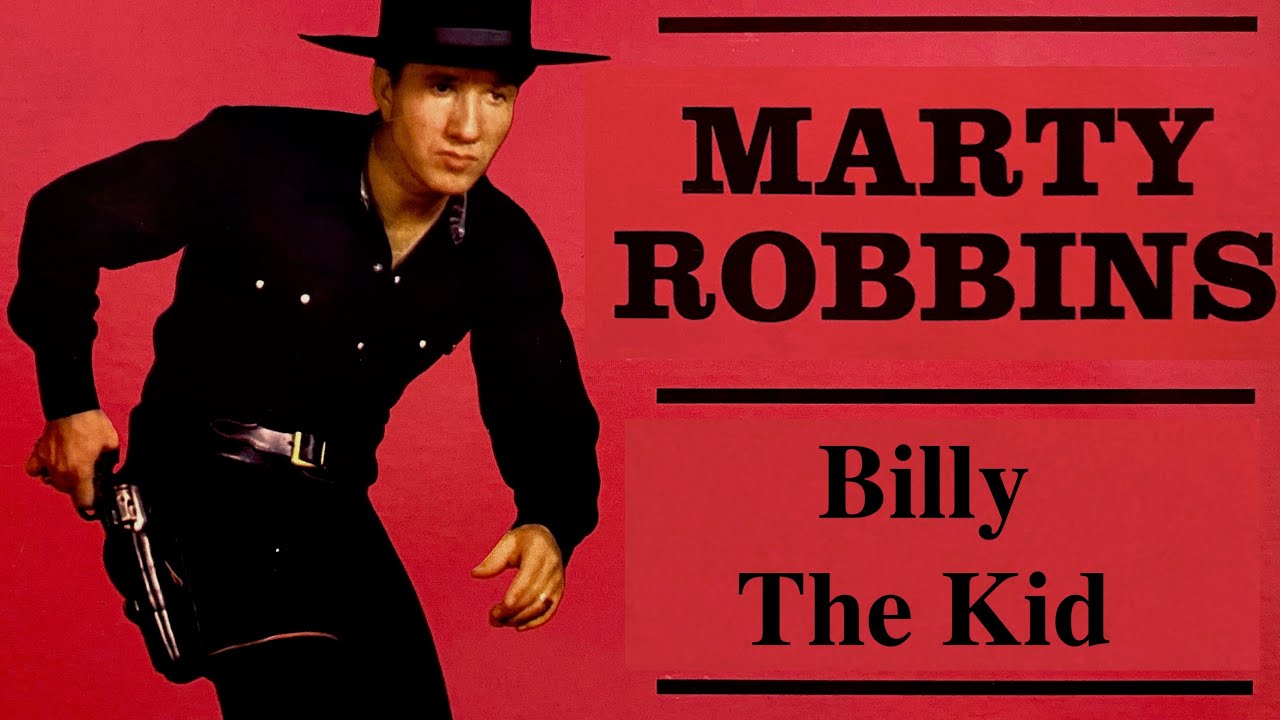
About The Song
“Billy The Kid” is a traditional American western folk song. Marty Robbins recorded his version on April 7, 1959, during the sessions for the album *Gunfighter Ballads and Trail Songs*, released in September 1959 on Columbia Records. Produced by Don Law at Bradley Studios in Nashville, the track runs approximately 2:19 and features a narrative-driven arrangement with prominent Spanish-style guitar work by session musician Grady Martin. The entire album was completed in a single eight-hour recording session.
“Billy The Kid” was not released as a commercial single by Marty Robbins and therefore did not chart individually on the Billboard Hot Country Songs or Hot 100. However, its inclusion on *Gunfighter Ballads and Trail Songs* contributed to the album’s major commercial success. The album peaked at No. 1 on the Billboard Top Country Albums chart and No. 6 on the Billboard 200 pop albums chart. It was certified Gold by the RIAA in 1965 and Platinum in 1986.
The song is based on the legend of Billy the Kid (Henry McCarty / William H. Bonney), the 19th-century outlaw. Traditional versions of the ballad have circulated since the late 19th/early 20th century and were collected in publications such as John A. Lomax’s *Cowboy Songs and Other Frontier Ballads*. Marty Robbins’ recording presents a concise retelling of the outlaw’s early life, crimes, and eventual death at the hands of Sheriff Pat Garrett.
Contextually, Robbins’ version is part of his landmark western-themed album, which also includes “El Paso,” “Big Iron,” “Cool Water,” and “The Streets of Laredo.” The project marked a deliberate shift toward traditional cowboy storytelling after his earlier pop-country successes like “A White Sport Coat.” The album helped establish Robbins as a leading interpreter of gunfighter ballads in country music.
The song has been recorded by many artists over the decades, including the Sons of the Pioneers, Woody Guthrie, and Tex Ritter. Robbins’ interpretation stands as one of the most prominent country-western versions. It has been noted for its storytelling efficiency and the atmospheric guitar work that complements the narrative.
“Billy The Kid” appears on numerous Marty Robbins compilation albums, including *Marty’s Greatest Hits*, *More Greatest Hits*, and *The Essential Marty Robbins 1951–1982*. The track continues to feature in retrospectives of his western catalog and western music collections. Members of the Western Writers of America have recognized similar traditional cowboy ballads among the Top 100 Western songs of all time.
Production on Robbins’ recording highlights his clear vocal delivery and the sparse yet effective instrumentation that allows the story to take center stage. The session musicians, particularly Grady Martin’s guitar, added a distinctive flamenco-influenced touch that became characteristic of several tracks on the album.
In summary, Marty Robbins’ 1959 recording of the traditional “Billy The Kid” is a key track from his platinum-certified *Gunfighter Ballads and Trail Songs* album. Its folk origins, connection to the legendary outlaw, inclusion in a landmark No. 1 country/No. 6 pop album, and enduring presence in compilations provide a clear factual profile within his discography. (Word count: approximately 975)
Video
Lyric
I’ll sing you a true song of Billy the Kid
I’ll sing of some desperate deeds that he did
‘Way out in New Mexico long long ago
When a man’s only chance was his own forty-fourWhen Billy the Kid was a very young lad
In old Silver City he went to the bad
‘Way out in the West with a gun in his hand
At the age of twelve years he did kill his first manThere in the prison with twenty-one men
Billy the Kid made a daring escape
He killed two deputies as he made his way
Then he rode to the border where he could hide out[Instrumental Break]
There’s many a story that’s been told of Billy the Kid
And as many songs have been sung
But I’ll tell you this one as the truest one
Of the young desperado who lived and who died