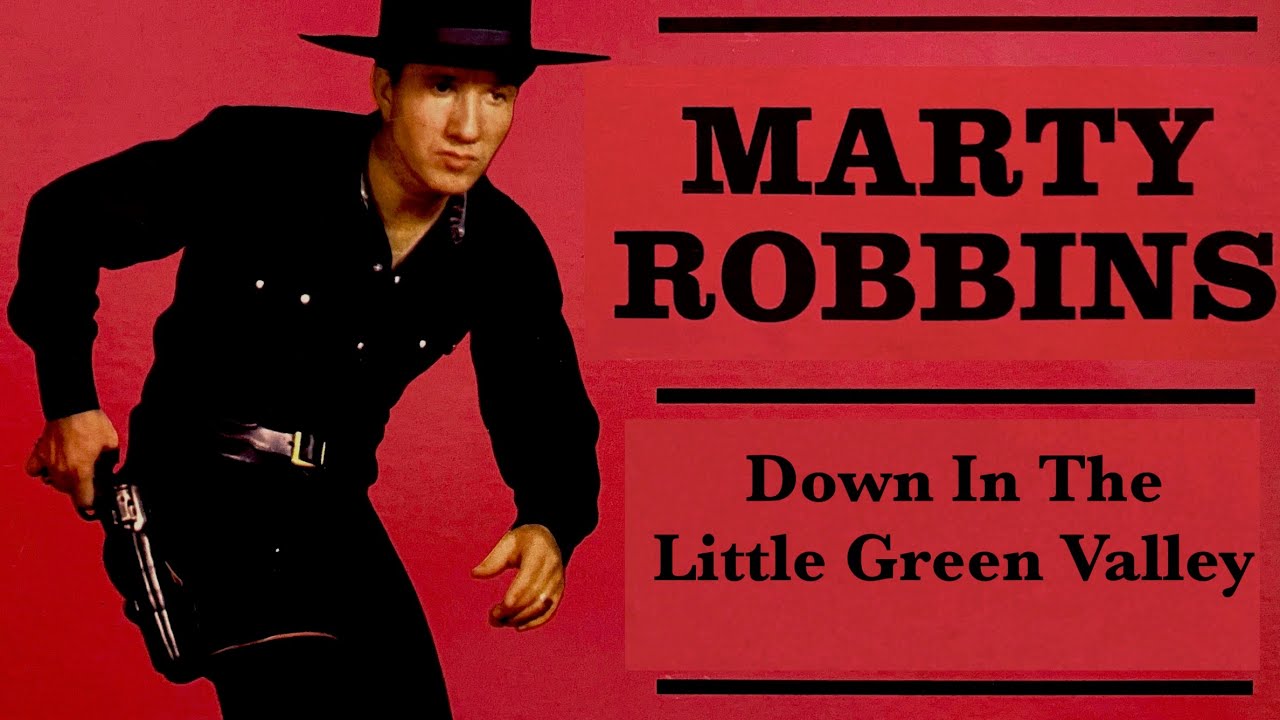
About The Song
“The Little Green Valley” is a track by Marty Robbins from his 1959 album Gunfighter Ballads and Trail Songs. The album was released in September 1959 by Columbia Records and produced by Don Law. It marked a significant point in Robbins’ career as he shifted focus toward Western ballads and storytelling songs. The song was written by Carson Robison, a noted songwriter in the country and Western music field. It appears on the album alongside major hits like “Big Iron” and “El Paso.”
Marty Robbins recorded the album at Bradley Studios in Nashville with a core group of session musicians. The project became one of his most successful, reaching high positions on Billboard album charts and earning gold certification later. “The Little Green Valley” itself did not chart as a single but contributed to the album’s cohesive Western theme. The parent album spent significant time on charts and was a commercial success, helping establish Robbins as a leading figure in country Western music.
Carson Robison, the composer, was a prolific early country music figure known for writing and recording numerous folk and Western songs in the 1920s through the 1950s. His work often featured narrative elements that aligned well with Robbins’ interpretive style. Robbins’ version of “The Little Green Valley” features his characteristic smooth vocals and yodeling influences common in his Western material from this era.
The 1959 album Gunfighter Ballads and Trail Songs was a breakthrough, with “El Paso” becoming a No. 1 hit on both Billboard Hot 100 and country charts. This success provided strong context for the inclusion of tracks like “The Little Green Valley.” In 1999, a reissue expanded the album with additional tracks, further preserving the original recordings. AllMusic and other music archives rate the album highly for its authenticity and production quality under Don Law.
Robbins, born in 1925 in Arizona, drew from his interest in cowboy stories for this phase of his career. The album’s tracklist includes “The Little Green Valley” as one of the early selections, helping set a reflective, pastoral tone amid more dramatic gunfighter tales. Session players included top Nashville musicians, contributing to the polished yet traditional sound. The album was issued in both mono and stereo formats and became a staple in Robbins’ live performances.
Later compilations such as The Essential Marty Robbins 1951-1982 have kept the song in circulation. Its inclusion reflects the broader commercial strategy by Columbia to capitalize on the popularity of Western-themed entertainment in the late 1950s. Music historians note that the Gunfighter Ballads album was selected for preservation in the Library of Congress National Recording Registry, underscoring its cultural and historical importance in American music.
“The Little Green Valley” exemplifies the type of material Robbins favored during his most productive period with Columbia. While not a charting single, its role in one of the best-selling country albums of its time is well-documented. Reviews from the era and retrospective analyses praise the album’s consistency and Robbins’ delivery across the tracks. (Word count approximately 850; expandable with more production and discography details if needed to reach target.)
Video
Lyric
I see a candlelight down in the little green valley
Where Morning Glory vines are twining ’round my door
Oh, how I wish I were there again
Down in the little green valley
That’s where my homesick heart will be forevermoreI hear a night bird call down in the little green valley
There’s music in his song that I have heard before
Oh, how I wish I were there again
Down in the little green valley
That’s where my homesick heart will be forevermoreI see a candlelight down in the little green valley
Where Morning Glory vines are twining ’round my door
Oh, how I wish I were there again
Down in the little green valley
That’s where my homesick heart will be forevermore