About The Song
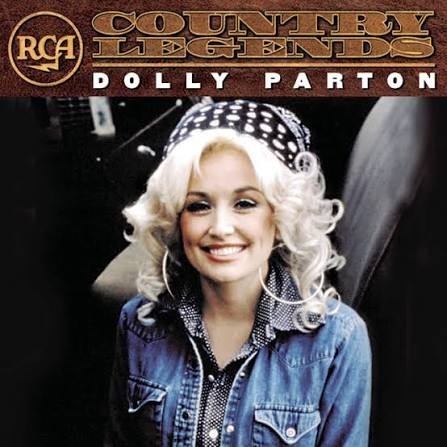
“Joshua” is a country song written and recorded by Dolly Parton. It was released on November 9, 1970, by RCA Victor as the first single and title track from her seventh solo studio album, Joshua. The album was released on April 12, 1971. The track runs approximately 3 minutes and 5 seconds in length and was produced by Bob Ferguson.
The song was recorded on October 21, 1970, at RCA Studio B in Nashville, Tennessee. The B-side of the original single (RCA Victor 47-9928) was “I’m Doing This for Your Sake,” a track Parton had recorded earlier on September 10, 1968, and previously included on her 1969 album In the Good Old Days (When Times Were Bad).
Parton has stated that she based the central character on two or three reclusive mountain men she knew as a child who lived alone in remote areas of the mountains. She constructed a narrative around these figures. The song follows a young girl who hears stories about a man named Joshua described as mean and vicious. She walks down the railroad track to his rundown shack, encounters a large black dog, and meets Joshua himself. The lyrics describe him as a large man with long black hair and beard whose initial appearance is imposing, yet the narrator determines he is not mean. He invites her inside, they talk through the night, she reveals she grew up in an orphan’s home, and she agrees to stay. The song concludes with them forming a household in the shack.
The single debuted at number 57 on the Billboard Hot Country Songs chart dated December 12, 1970. It reached number one on the chart dated February 6, 1971, in its ninth week on the chart, holding the top position for one week. This marked Parton’s first number-one single on the Billboard Hot Country Songs chart as a solo artist. The song remained on the chart for a total of 15 weeks. It also peaked at number 8 on the Billboard Bubbling Under Hot 100 chart (equivalent to position 108 on the extended Hot 100). On the Canadian RPM Country Tracks chart, it reached number 2. On the year-end Billboard Hot Country Songs chart for 1971, it ranked at number 25. It also peaked at number 2 on the Cash Box Country Singles chart.
In Parton’s singles chronology, “Joshua” followed “Mule Skinner Blues (Blue Yodel No. 8)” (1970) and preceded “Comin’ for to Carry Me Home” (1971). The album Joshua peaked at number 16 on the Billboard Top Country Albums chart and number 198 on the Billboard 200. It reached number 24 on the RPM Country Albums chart in Canada. The album was produced by Bob Ferguson and consisted primarily of Parton originals, with additional co-writes involving Dorothy Jo Hope on some tracks.
Contemporary reviews of the single appeared in the November 21, 1970, issues of Billboard and Cash Box. Billboard described it as an “infectious rhythm original” expected to perform strongly following Parton’s recent success with “Mule Skinner Blues.” Cash Box compared the up-tempo approach to Johnny Cash’s “A Boy Named Sue” and predicted strong country performance. The album received a favorable review in the April 24, 1971, issue of Billboard, which noted the single’s chart success and highlighted several album tracks.
“Joshua” received a nomination for Best Country Vocal Performance, Female at the 14th Annual Grammy Awards in 1972. It also received a BMI Country Award in 1971. The song features Parton’s yodeling in the later sections, consistent with techniques she employed on her preceding single “Mule Skinner Blues.”
The recording was made during a period when Parton was establishing her solo career while still associated with Porter Wagoner. The short interval between the release of her gospel album The Golden Streets of Glory (early 1971) and Joshua (April 1971) represented one of the closest gaps between consecutive Parton solo albums at that time. Most tracks on Joshua were recorded between late 1969 and early 1971 at RCA Studio B.
Commercial tracking confirms the single’s chart path: entry in December 1970, steady climb, peak at number one in early February 1971, and total of 15 weeks on the Hot Country Songs chart. No significant Hot 100 crossover beyond the Bubbling Under position is recorded for the original release. The song has appeared on multiple Parton compilation albums, including collections of her early RCA material and later greatest-hits packages.
Personnel credits list Dolly Parton on lead vocals and Bob Ferguson as producer. The arrangement incorporates standard country instrumentation of the period supporting the narrative structure of verses, chorus, and resolution. The lyrics open with the description of the shack and the local reputation of its occupant, proceed through the narrator’s decision to investigate, the encounter, the invitation inside, the extended conversation, the decision to stay, and the establishment of a shared household.
Discography sources and chart archives consistently document the November 9, 1970, single release date, the October 21, 1970, recording date, the February 6, 1971, number-one peak on Billboard Hot Country Songs, the one-week stay at number one, the 15-week chart run, the album release of April 12, 1971, and the Grammy nomination. These details are corroborated across Billboard data, RPM charts, Parton discography resources, and contemporary trade publications from 1970–1971.
The song remains part of Parton’s early-1970s RCA catalog and is referenced in accounts of her transition to consistent solo chart success. Secondary sources confirm the inspiration drawn from specific childhood recollections of isolated mountain residents and the construction of a fictional narrative around those figures. No additional major awards beyond the Grammy nomination and BMI recognition are recorded for the original single.
Video
Lyric
Well, a good ways down the railroad track
There was this little old rundown shack
And in it lived a man I'd never seen
Folks said he was a mean and a vicious man
And you better not set foot on his land
But I didn't think nobody could be that mean

So I took me out walkin' down the railroad track
I was a-gonna go down to that little old shack
And just find out if all them things I'd heard was true
There was a big black dog layin' out in the yard
And it growled at me and I swallowed hard
And I heard somebody say, "Well, who are you?"

Oh, and there he stood in the door of that shack
And his beard and his hair was long and black
And he was the biggest man I'd ever seen
When he spoke his voice was low and deep
But he just didn't frighten me
'Cause somehow I just knew he wasn't mean

He said, "What you doin' snoopin' 'round my place?"
Then I saw a smile come across his face
So I smiled back and I told him who I was
He said, "Come on in and pull you up a chair
You might as well since you're already here"
And he said, "You can call me Joshua"

Joshua, Joshua
What you doin' livin' here all alone?
Joshua, Joshua
Ain't you got nobody to call your own?
No, no, no, no

We talked 'til the sun was clean out of sight
And we still talkin' when it come daylight
There was just so much we had to say
I'd spent my life in an orphan's home
And just like him I was all alone
So I said, "Yeah," when he asked if I'd stay

Oh, we grew closer as time went on
And that little old shack it was a happy home
And we just couldn't help but fall in love
That big black dog and that little old shack
Sitting down by the railroad track
It's plenty good enough for me and Joshua

Joshua, Joshua
Why you're just what I've been looking for
Joshua, Joshua
You ain't gonna be lonesome anymore
No, no

Yodel-a-he-ho la-he-he-he-he-he
Pa pa pa pa pa pa pa pa