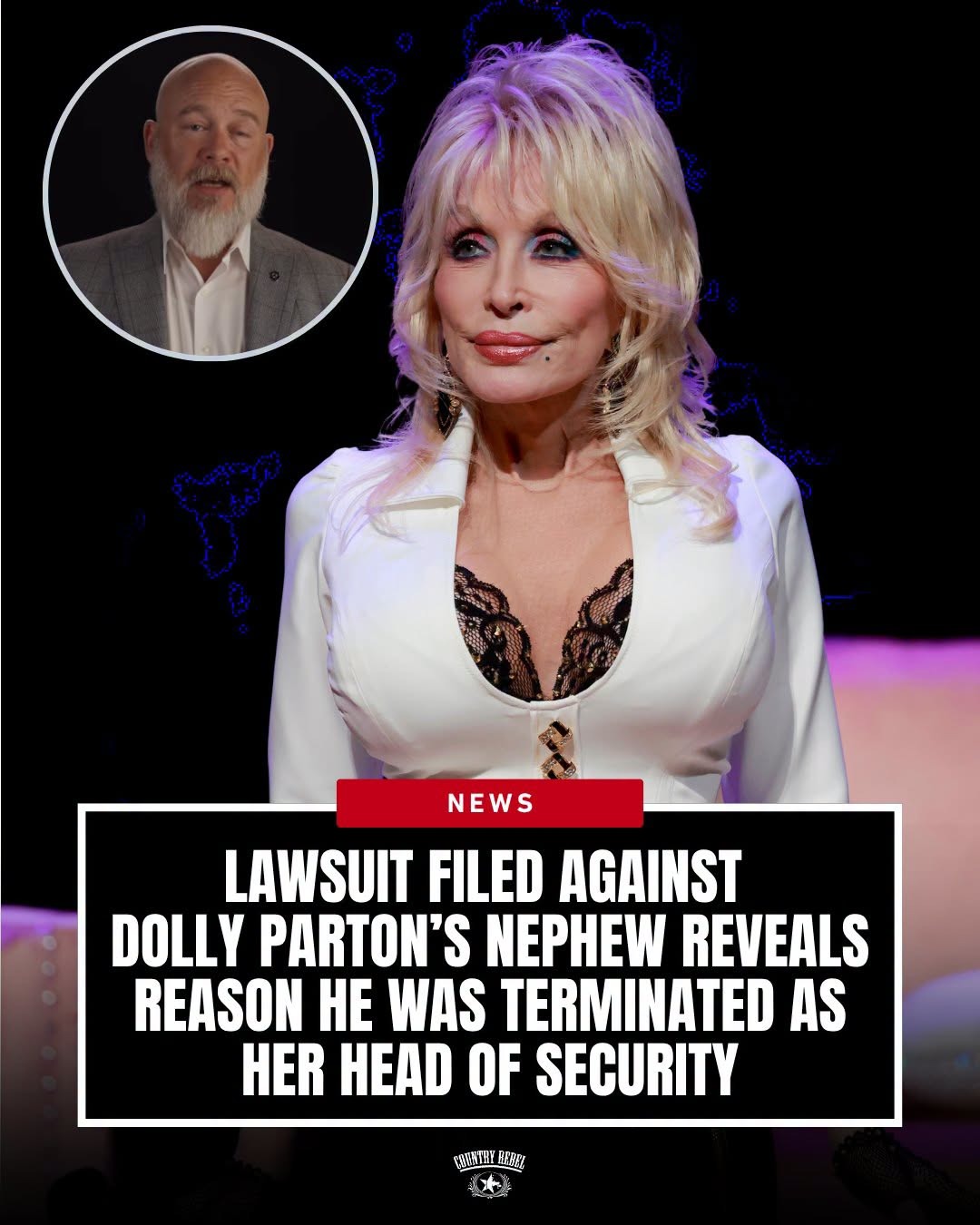
Less than a month after country music icon Dolly Parton died at the age of 80, the company tasked with protecting her legacy has taken legal action against one of her closest relatives. She’s Alive, LLC, the entity formed by Parton to safeguard her estate and brand after her death, filed a lawsuit and sought a restraining order against her nephew, Bryan Seaver, on September 22, 2026. The filings accuse Seaver of launching a campaign of threats, intimidation, and coercion that began weeks before Parton’s passing and intensified after her death.
Seaver, the son of Parton’s sister Cassie and longtime head of security for the singer, was terminated from his role earlier this month. Court documents obtained by PEOPLE magazine detail a series of alleged actions that the estate says left staff, advisors, and business partners in fear. According to the filings, Seaver “became emboldened” following Parton’s death and used his position and background to pressure those responsible for managing her affairs.
The lawsuit claims Seaver began issuing threats a few weeks prior to Parton’s death on August 25, 2026. In written communications, he allegedly vowed to “destroy the entire brand.” He is also said to have told Parton’s entertainment attorney, “I’m not an entertainment person. I’m a killer.” The documents further allege that Seaver threatened to inflict reputational and economic harm on individuals chosen to protect Parton’s brand and legacy. He reportedly planned to launch a podcast aimed at “ruining her brand partnerships unless he was paid.”
Central to the estate’s case is the claim that Seaver made “threats of real-world violence” against staff members, partners, and legal and business advisors. The filings state that he leveraged his prior service as a military contractor to amplify those threats. “As the entity entrusted by Ms. Parton to protect and promote her life’s work for future generations, SAL must cultivate a safe work environment for employees, advisors, and partners, free from intimidation or hostility—particularly intimidation by an armed former security contractor,” one court document states. “Without relief, Defendants’ calculated campaign will continue to inflict fear, to destabilize SAL’s operations, and to cause further irreparable harm.”
She’s Alive, LLC—commonly referred to in the filings as SAL—was established by Parton specifically to manage and protect her intellectual property, business interests, and public image after her death. The company argues that Seaver’s conduct has already disrupted operations and created an atmosphere of hostility that endangers the continuity of Parton’s carefully built brand. The restraining order filed alongside the lawsuit seeks to limit Seaver’s contact with estate personnel and related parties while the legal process unfolds.
Bryan Seaver had been a fixture in Parton’s inner circle for more than two decades. He succeeded his father, Larry Seaver, as head of security and later became CEO of Squadron Augmented Protection Services. In the days following Parton’s death, Seaver was the family member who publicly announced the news in a video statement released on August 25. His abrupt termination earlier this month had initially been reported without explanation. The newly obtained legal documents now provide the estate’s account of the circumstances leading to that decision.
Parton’s death at age 80 marked the end of an extraordinary career that spanned more than six decades. Known worldwide for hits such as “Jolene,” “9 to 5,” and “I Will Always Love You,” she built an empire that included music, film, television, theme parks, and philanthropy. Dollywood, her popular theme park in Pigeon Forge, Tennessee, has already announced plans to honor her life and legacy in the coming months. The estate’s legal action underscores the high stakes involved in preserving that legacy amid what it describes as internal threats.
The lawsuit paints a picture of a relative who, according to the estate, shifted from trusted protector to adversary in the final weeks of Parton’s life and the immediate aftermath of her death. Seaver is accused of using both verbal and written communications to pressure the team charged with carrying out Parton’s wishes. The estate maintains that his alleged demand for payment in exchange for refraining from damaging brand partnerships constitutes coercion, while the references to violence and his military contracting background elevated the situation beyond ordinary family or business disputes.
Legal observers note that estate disputes involving high-profile figures often involve complex questions of control, compensation, and personal loyalty. In this case, the filings emphasize the estate’s duty to maintain a safe working environment and to prevent further disruption. By seeking both a civil lawsuit and a restraining order on the same day, She’s Alive, LLC signaled that it views the situation as urgent. The documents repeatedly stress the potential for ongoing harm if Seaver is not restrained from contacting or intimidating those connected to the estate.
Seaver has not publicly responded to the allegations in the days since the filings became public. As of September 23, 2026, no formal statement from him or his representatives had been issued. The case is in its earliest stages, and the claims remain allegations that have not been tested in court. The restraining order, if granted, would temporarily restrict Seaver’s ability to communicate with or approach certain individuals associated with the estate while the broader lawsuit proceeds.
The timing of the legal action—less than a month after Parton’s death—has drawn attention to the challenges of succession planning for major entertainment brands. Parton had long been known for her meticulous attention to her image and business interests. The creation of She’s Alive, LLC was intended to provide a clear structure for managing those interests after her passing. The estate now argues that Seaver’s alleged conduct has undermined that structure and created an atmosphere of fear that must be addressed through the courts.
Background details in the filings highlight Seaver’s long tenure and the trust previously placed in him. For more than twenty years he oversaw security for Parton, a role that required close proximity to the star and her operations. His father had previously held a similar position, making the family’s involvement in Parton’s security apparatus multi-generational. That history, the estate contends, makes the alleged shift in behavior particularly damaging.
As the legal process begins, the estate has framed its actions as necessary to fulfill Parton’s stated intentions for her life’s work. The company presents itself as the guardian of a brand built on music, storytelling, and carefully cultivated public goodwill. Any campaign that threatens partnerships, staff safety, or operational stability, it argues, directly conflicts with those goals. The references to a planned podcast and threats of reputational harm suggest the estate is particularly concerned about public messaging that could affect ongoing commercial relationships.
Dollywood’s recent announcement of plans to honor Parton offers a contrasting note of continuity. While the theme park moves forward with tributes, the estate is simultaneously addressing what it describes as an internal crisis. The dual developments illustrate the complicated reality of managing a late celebrity’s affairs: public mourning and celebration on one side, private legal conflict on the other.
The case will likely turn on the specific communications and actions attributed to Seaver in the weeks surrounding Parton’s death. Courts examining requests for restraining orders typically look for evidence of credible threats and the potential for ongoing harm. The estate’s filings assert that both elements are present, citing written vows to destroy the brand, statements referencing violence, and the leverage of a military contracting background.
For fans of Dolly Parton, the news adds an unexpected and troubling chapter to the period of mourning that followed her death. Parton was celebrated not only for her music and business acumen but also for her generosity and down-to-earth persona. The suggestion that a longtime family member and security chief has become the subject of such serious allegations stands in sharp contrast to the public image she maintained for decades.
As the lawsuit and restraining order request move through the legal system, additional details may emerge. For now, the documents obtained by PEOPLE provide the most detailed account available of the estate’s position. They describe a calculated campaign that, according to the filings, began before Parton’s death, intensified afterward, and continues to pose risks to the people and institutions charged with protecting her legacy.
She’s Alive, LLC has made clear that it intends to pursue the matter vigorously. In the words of the filing, the company must ensure a safe environment free from intimidation, particularly when the source of that intimidation is a former security contractor with access to the inner workings of the estate. Whether the courts will grant the requested relief, and how Seaver will respond, remain to be determined. What is already evident is that the protection of Dolly Parton’s life’s work has entered a contentious new phase, one defined as much by legal filings as by public remembrance.