About The Song
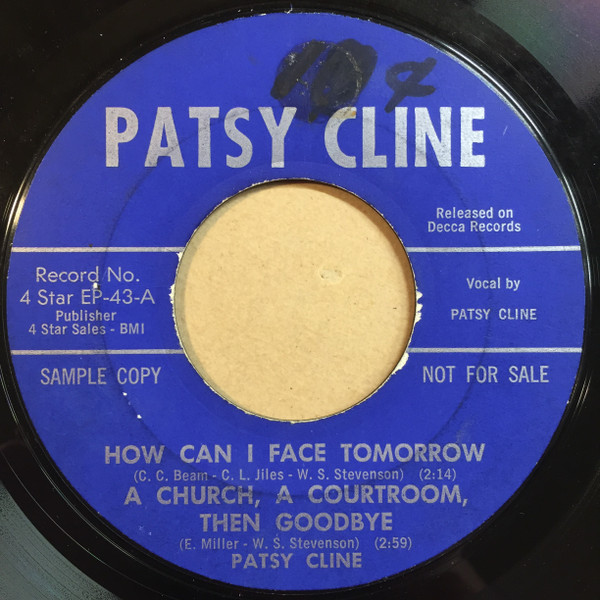
“How Can I Face Tomorrow” is a track by American country singer Patsy Cline, released as the B-side to the single “Lovesick Blues” on Decca Records (catalog 9-31061) on March 7, 1960. The song was recorded on January 27, 1960, at Bradley Film and Recording Studio in Nashville, Tennessee, during a Decca session produced by Owen Bradley. Written by Clyde Beam (also credited as C.C. Beam or Buster Beam), Charles L. Jiles (or Lawton Jiles), and W.S. Stevenson, it features Cline’s emotive vocals over a classic honky-tonk arrangement with piano (likely Floyd Cramer), guitar, bass, and subtle backing elements typical of her transitional period from Four Star to full Decca productions. The track runs approximately 2:19 in duration and represents one of her early Decca recordings before her major crossover breakthroughs with “I Fall to Pieces” and “Crazy” in 1961.
The single did not chart on the Billboard Hot Country Songs or pop charts, consistent with many of Cline’s pre-1961 releases. “Lovesick Blues” (the A-side, a cover of the Hank Williams standard) also failed to chart significantly, though it helped bridge her honky-tonk roots with emerging Nashville Sound polish. “How Can I Face Tomorrow” later appeared on various posthumous compilations, including Here’s Patsy Cline (1965 Vocalion), That’s How a Heartache Begins (1964 Decca), The Patsy Cline Story (1973), and reissues like The Commemorative Collection and budget anthologies. It has also been included in live radio transcription versions and recent archival releases such as Imagine That: The Lost Recordings (1954-1963) (2025 Elemental Music/Deep Digs), which features alternate takes and unreleased material from her career.
Musically, the song is a mid-tempo country weeper with a straightforward, heartfelt arrangement that highlights Cline’s vocal warmth and phrasing. The lyrics express deep heartbreak and despair from unrequited love or loss, with the narrator questioning how to endure the future after betrayal or separation (“How can I face tomorrow when I know I’m losing you? / The dreams we shared have all been torn apart”). The narrative includes imagery of wedding bells ringing for someone else, torn dreams, and inevitable loneliness, delivered with poignant resignation. Owen Bradley’s production keeps it simple yet effective, allowing Cline’s emotional delivery to carry the weight of the story amid the era’s country instrumentation.
The track is part of Cline’s Decca catalog from 1960 onward, a phase where she recorded around 50 masters yielding her biggest hits before her death in a plane crash on March 5, 1963. While not a commercial success, “How Can I Face Tomorrow” exemplifies her ability to convey profound sorrow in traditional country style, contributing to her reputation as a masterful interpreter of heartbreak songs. Posthumous reissues have kept it in circulation, often grouped with her early Decca material in retrospectives. Sources like discographies, Wikipedia song lists, and archival notes confirm the January 27, 1960 session and March 1960 release, underscoring its place in her transitional discography of over 100 recordings from 1955 to 1963.
Video
Lyric
Tonight alone I’m thinking
Of the things we used to do
There’s laughter in the distance
But none for me and youThe wedding bells are ringing
But to me their chimes are blue
How can I face tomorrow
When I know I’m losing you?The dreams we shared have all been torn apart
It’s your wedding day but I can’t claim your heart
How can I face tomorrow
When I know I’m losing you?No more will there be moonlight walks
Or kisses in the rain
No more will there be tender words
To ease my painThe wedding bells are ringing
But to me their chimes are blue
How can I face tomorrow
When I know I’m losing you?