About The Song
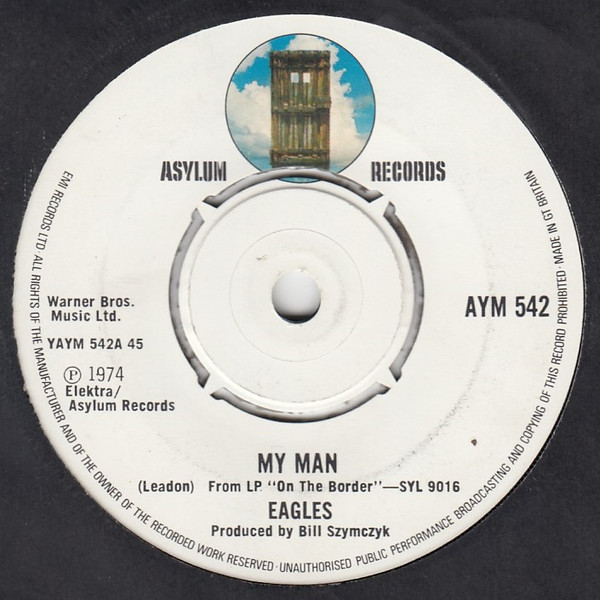
“My Man” is a heartfelt country rock ballad written and sung by Bernie Leadon. It appears as the fourth track on the Eagles’ third studio album, On the Border, released on March 22, 1974, by Asylum Records. Produced by Bill Szymczyk (with Glyn Johns on two tracks), the song was recorded during sessions at the Record Plant in Los Angeles and Olympic Studios in London. The arrangement features acoustic guitars, pedal steel, and rich vocal harmonies, with Leadon on lead vocals supported by the band. Clocking in at 3 minutes and 30 seconds, it provides a tender, reflective moment amid the album’s shift toward a harder rock sound.
The album On the Border marked a transitional phase for the Eagles, introducing guitarist Don Felder and moving away from the pure country rock of their first two records toward a more rock-oriented style. It peaked at number 17 on the Billboard 200 and was certified 2× Platinum by the RIAA. Singles “Already Gone,” “James Dean,” and “Best of My Love” were released, with the latter becoming the band’s first number-one hit on the Billboard Hot 100 in 1975.
“My Man” is Leadon’s poignant tribute to his close friend and former Flying Burrito Brothers bandmate Gram Parsons, who died of a drug overdose on September 19, 1973, at age 26 in Joshua Tree, California. Leadon wrote the song shortly after Parsons’ death, which occurred while the Eagles were in London beginning work on the album. The lyrics reflect on life’s struggles, the fleeting nature of talent, and acceptance of loss, with a direct nod to Parsons’ song “Hickory Wind” in the line “Like a flower, he bloomed ’til that old hickory wind called him home.” The opening verse offers philosophical comfort before shifting to the personal elegy.
Leadon and Parsons shared a deep connection through their pioneering work in country rock, first with the Burrito Brothers and earlier influences from the Byrds and International Submarine Band. Parsons’ death profoundly affected Leadon, who learned of it upon arriving in England for recording. Though some early accounts suggested the song partially referenced Duane Allman (due to his greeting “My man” to Leadon), the primary inspiration and completion were tied to Parsons, as confirmed by Leadon and band biographers.
Though not released as a single, “My Man” has been hailed by critics and fans as one of the Eagles’ most moving deep cuts. Ultimate Classic Rock ranked it among Leadon’s finest contributions, praising its emotional depth and harmonies. It appears on compilations like Selected Works: 1972–1999 (2000) and the remastered On the Border. Covers include versions by Daryl Braithwaite, and tribute performances often highlight its connection to Parsons.
The track underscores Leadon’s significant role in the Eagles’ early country-infused sound before his departure in 1975. Its themes of resilience—”we who must remain go on living just the same”—and celebration of a life cut short resonate as a timeless memorial in the band’s catalog.
Video
Lyric
Tell me the truth, how do you feel?
Like you’re rollin’ so fast that you’re spinnin’ your wheels?
Don’t feel too bad, you’re not all alone
We’re all tryin’ to get along
With ev’rybody else try’n’ to go their way
You’re bound to get tripped, and what can you say?Just go along ’til they turn out the lights
There’s nothin’ we can do to fight it
No man’s got it made ’til he’s far beyond the pain
And we who must remain go on living just the sameI once knew a man, very talented guy
He’d sing for the people and people would cry
They knew that his song came from deep down inside
You could hear it in his voice and see it in his eyes
And so he traveled along
Touch your heart, and then be gone
Like a flower, he bloomed ’til that old hickory wind
Called him homeMy man’s got it made
He’s gone far beyond the pain
And we who must remain go on living just the sameMy man’s got it made
He’s gone far beyond the pain
And we who must remain go on living just the same
We who must remain go on laughing just the same