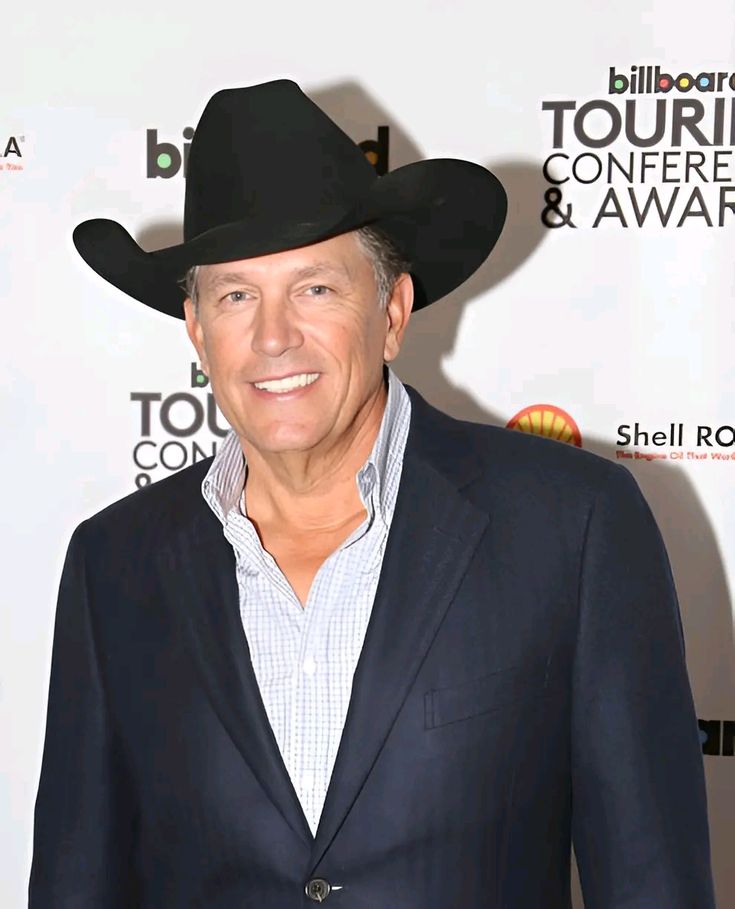
George Strait, widely celebrated as the King of Country Music, is once again commanding headlines—this time not only for his enduring musical legacy, but for a newly revealed collaboration that has unexpectedly reignited conversation around one of the biggest entertainment stages in the world: the Super Bowl 2026 halftime show.
In recent days, Strait announced a high-profile new collaboration that blends country tradition, craftsmanship, and cultural heritage. The project, developed in partnership with a long-established Western lifestyle brand, reflects everything fans associate with Strait: authenticity, timeless style, and deep roots in American country culture. While details of the collaboration focus on premium design and heritage values, the announcement quickly traveled far beyond the country music community.

What surprised many observers was how swiftly the news sparked renewed fan speculation about Super Bowl 2026—a topic that has already been surrounded by debate and anticipation. Across social media platforms, fans began connecting the dots, suggesting that Strait’s heightened public presence and renewed visibility could signal something even bigger on the horizon.
For decades, George Strait has stood as a symbol of musical consistency and integrity. With more than 60 No. 1 hits, sold-out stadium shows, and a career spanning over 40 years, he represents a form of American music that transcends trends. Unlike artists who frequently reinvent themselves, Strait’s strength has always been his steadiness—an approach that many fans believe aligns perfectly with the spirit of a unifying national event like the Super Bowl.
As discussions spread online, some fans began openly calling for George Strait to be considered for a Super Bowl halftime appearance, whether as a headliner, special guest, or symbolic performer. While there has been no official announcement from the NFL, the conversation alone has gained traction, highlighting a broader cultural question: Should the Super Bowl halftime show lean more toward contemporary global pop—or return to honoring iconic American music legends?
Supporters argue that Strait’s presence would bring something rarely seen in recent halftime shows—a sense of calm authority, storytelling, and generational connection. Many note that his music appeals not just to country fans, but to listeners who grew up with his songs as part of everyday American life. For these fans, Strait represents shared memory rather than spectacle.
On the other hand, critics point out that the Super Bowl halftime show has evolved into a global entertainment platform, often prioritizing artists with massive international streaming numbers and high-energy production styles. From this perspective, the discussion around George Strait highlights a cultural crossroads rather than a concrete prediction.
Still, the fact that Strait’s name continues to surface in these conversations speaks volumes. Few artists, particularly those who have largely avoided pop crossover trends, maintain this level of relevance so late into their careers. His recent collaboration has only reinforced the idea that George Strait is not simply a legacy act—but a living symbol of country music’s influence on American identity.
Industry insiders note that even without a halftime performance, Strait’s continued success proves that traditional country music still holds immense cultural weight. His stadium concerts continue to sell out, his catalog remains widely streamed, and his public appearances consistently draw national attention.
As Super Bowl 2026 approaches, speculation will undoubtedly continue. Whether George Strait ultimately plays a role in the event or not, the buzz surrounding his name reveals something deeper: a longing among many fans for authenticity, heritage, and timeless artistry in an era dominated by fast-moving trends.
For now, George Strait remains focused on his music, his collaborations, and his connection with fans. But as history has shown, whenever the King of Country steps into the spotlight, the conversation tends to follow—and sometimes, it grows far bigger than anyone expected.