About The Song
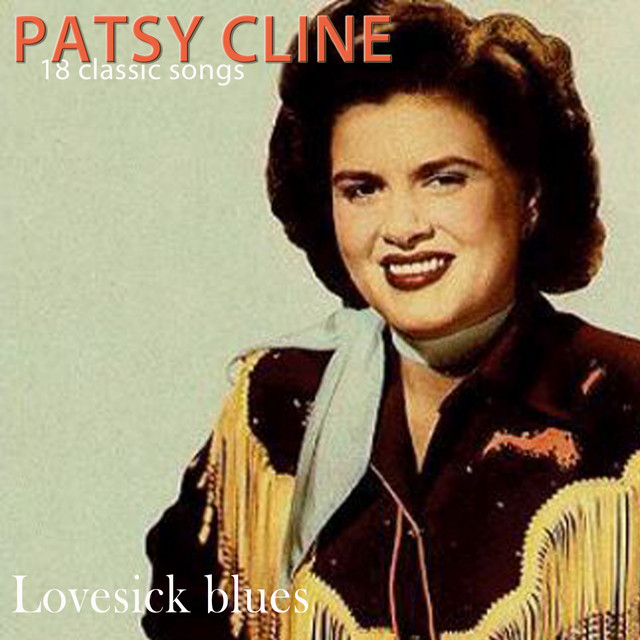
“Lovesick Blues” is a classic Tin Pan Alley song composed by Cliff Friend with lyrics by Irving Mills. Originally featured in the 1922 musical “Oh, Ernest,” it was first recorded by Elsie Clark and Jack Shea that year. The song gained prominence in country music through Emmett Miller’s versions in 1925 and 1928, followed by Rex Griffin’s recording around 1939. Hank Williams popularized it with his 1949 MGM release, which topped Billboard’s country chart for 16 weeks and reached number 24 on the jukeboxes list, becoming one of his signature hits. Patsy Cline recorded her version in late 1959 or early 1960 during her final sessions with Four Star Records, before fully transitioning to Decca Records.
Patsy Cline’s rendition was released as a single by Decca Records in March 1960 (Decca #31061), with “How Can I Face Tomorrow” as the B-side. Unlike her breakthrough hit “Walkin’ After Midnight” (which peaked at number 2 on country and 12 on pop in 1957), “Lovesick Blues” received limited promotion from the label and failed to chart on the Billboard Hot Country Songs or pop charts. It appeared on various compilations and EPs post-release, including the 1961 Patsy Cline EP (which combined Four Star tracks like this with newer Decca material) and later collections such as Hall of Fame 1973 (1973), Sweet Dreams: The Life and Times of Patsy Cline (1985), and The Definitive Collection (2004). The track has a runtime of approximately 2:00 to 2:20 in most versions, including radio transcriptions and film versions.
Musically, Cline’s take retains the song’s traditional country-blues structure with yodeling elements inspired by earlier performers like Hank Williams and Emmett Miller. Her delivery features emotive phrasing over a straightforward arrangement typical of late-1950s country recordings, highlighting her vocal range and emotional depth. This recording captures Cline in a transitional phase: still rooted in honky-tonk influences from her Four Star era but on the cusp of the polished Nashville Sound that defined her later Decca hits like “I Fall to Pieces” (1961) and “Crazy” (1961). Producer oversight for her Four Star material often came from figures like Owen Bradley in collaborative settings, though specific production credits for this track are tied to her independent sessions.
Additional context includes its inclusion in radio transcriptions from the late 1950s/early 1960s and occasional live performances, such as on Jubilee USA in 1959. The song did not achieve commercial success for Cline, partly due to label priorities shifting toward her emerging crossover potential. It remains part of her extensive catalog of over 100 recorded tracks from 1955 to 1963. Expert sources note its historical significance as a cover of a Hank Williams standard, showcasing Cline’s ability to reinterpret classics with her distinctive style. Posthumously, following her death in a March 5, 1963 plane crash, the track appeared in numerous budget compilations and reissues, contributing to her enduring legacy as a pioneering female country artist who influenced generations of vocalists.
Video
Lyric
Got a feeling ’cause I’m blue, oh, Lord
Since my daddy said goodbye
I don’t know what I’m gonna do
All I do is sit and cry, oh, Lord
That last long day he said goodbye
Lord, I thought I would die
He’ll do you, he’ll do me
He’s got that kinda loving, I love to hear him when heGot those lovesick blues
Lord, I got the lovesick blues
Straight from my heart to you
That means I’m lonesome for you
The lovesick blues
I got the lovesick blues
Got a feelin’ called the blues, oh, Lord
Since my baby said goodbye
And I don’t know what I’ll do
All I do is sit and sigh, oh, Lord
That last long day he said goodbye
Lord I thought I would die
It’ll happen to you
He’ll do the same thing to you
If you ever say goodbye