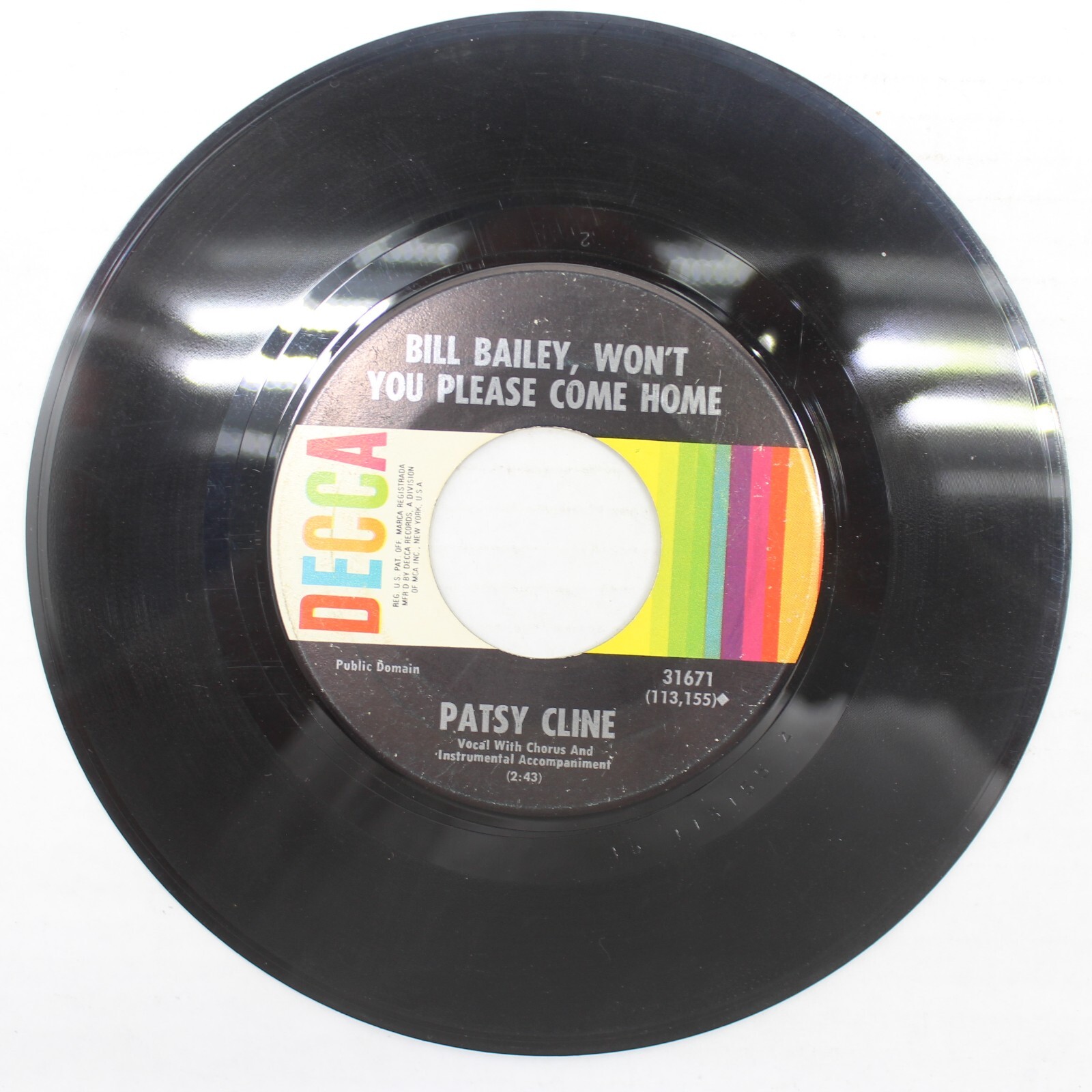
About The Song
“Bill Bailey, Won’t You Please Come Home” (full title often “(Won’t You Come Home) Bill Bailey”) is a classic ragtime standard written by Hughie Cannon in 1902, originally popularized by Arthur Collins and later recorded by artists like Louis Armstrong, Ella Fitzgerald, and Pearl Bailey. Patsy Cline recorded her version on February 6, 1963 [19:00-22:00 session], at Bradley Film and Recording Studio in Nashville, Tennessee, during one of her final Decca sessions produced by Owen Bradley. This late-career track features orchestral arrangement by Bill McElhiney, backing vocals by The Jordanaires, and a full string section including violinists Byron Bach, Brenton Banks, George Binkley III, and others, along with musicians like Grady Martin (electric guitar/director), Floyd Cramer (piano), Bob Moore (bass), Harold Bradley and Wayne Moss (electric bass), Buddy Harman (drums), and additional string players. The recording runs approximately 2:39 to 2:46 and reflects Cline’s polished Nashville Sound style from her Decca era (1960–1963), blending country with pop orchestration.
The song was released posthumously as a single on September 14, 1964 (or around November 1964 in some listings), by Decca Records (catalog 31671), paired with “He Called Me Baby” (written by Harlan Howard) as the A-side. It did not chart on the Billboard Hot Country Songs or pop charts, consistent with many of her posthumous singles following her death in a plane crash on March 5, 1963. The track appeared on various compilations, including That’s How a Heartache Begins (1964 Decca compilation album released November 2, 1964), The Patsy Cline Story (1973), Gold (2005), and reissues like The Commemorative Collection. It has also surfaced in live versions from radio transcriptions and performances, such as a 1961 Cimarron Ballroom live take and airchecks included in collections like The Patsy Cline Collection (1991) and Imagine That: The Lost Recordings (1954-1963) (2025 release featuring additional unreleased material).
Musically, Cline’s rendition is a swinging, upbeat interpretation with a jazzy feel, prominent piano, strings, and The Jordanaires’ harmonies adding warmth and swing. Her vocal performance is confident and playful, capturing the song’s pleading yet humorous tone. The lyrics follow the original standard: a woman begging her estranged lover, Bill Bailey, to return home, promising to cook, pay rent, and make amends for past wrongs (“I know that I’ve done you wrong / Remember that rainy eve that I drove you out / With nothing but a fine tooth comb”). This ragtime novelty contrasts with Cline’s typical heartbreak ballads but showcases her versatility in handling standards with country inflection. Owen Bradley’s production elevates it to a sophisticated pop-country hybrid, aligning with her crossover success in the early 1960s.
As one of her last studio recordings, “Bill Bailey, Won’t You Please Come Home” holds significance in her discography of over 100 tracks from 1955 to 1963. While not a commercial hit, it exemplifies her mature vocal control and the orchestral direction of her final Decca phase before her tragic passing. Posthumous releases helped preserve her legacy, with the song frequently included in anthologies highlighting her interpretive range across genres. Sources like discographies, SecondHandSongs, and session logs confirm the February 6, 1963 date and its role as a posthumous single, underscoring her enduring appeal as a pioneering female country artist who brought emotional depth to both original material and timeless standards.
Video
Lyric
Won’t you come home, Bill Bailey, won’t you come home?
I moan the whole night long
I’ll do the cooking, honey, I’ll pay the rent
I know that I’ve done you wrongRemember that rainy eve that I drove you out
With nothing but a fine tooth comb?
But now that my hair is turning gray
Won’t you come home, Bill Bailey?Won’t you come home, Bill Bailey, won’t you come home?
I moan the whole day long
I’ll do the cooking, darling, I’ll pay the rent
I know I’ve done you wrongRemember that rainy eve that I drove you out
With nothing but a fine tooth comb?
But know that I’m to blame and ain’t that a shame?
Bill Bailey, won’t you please come home?