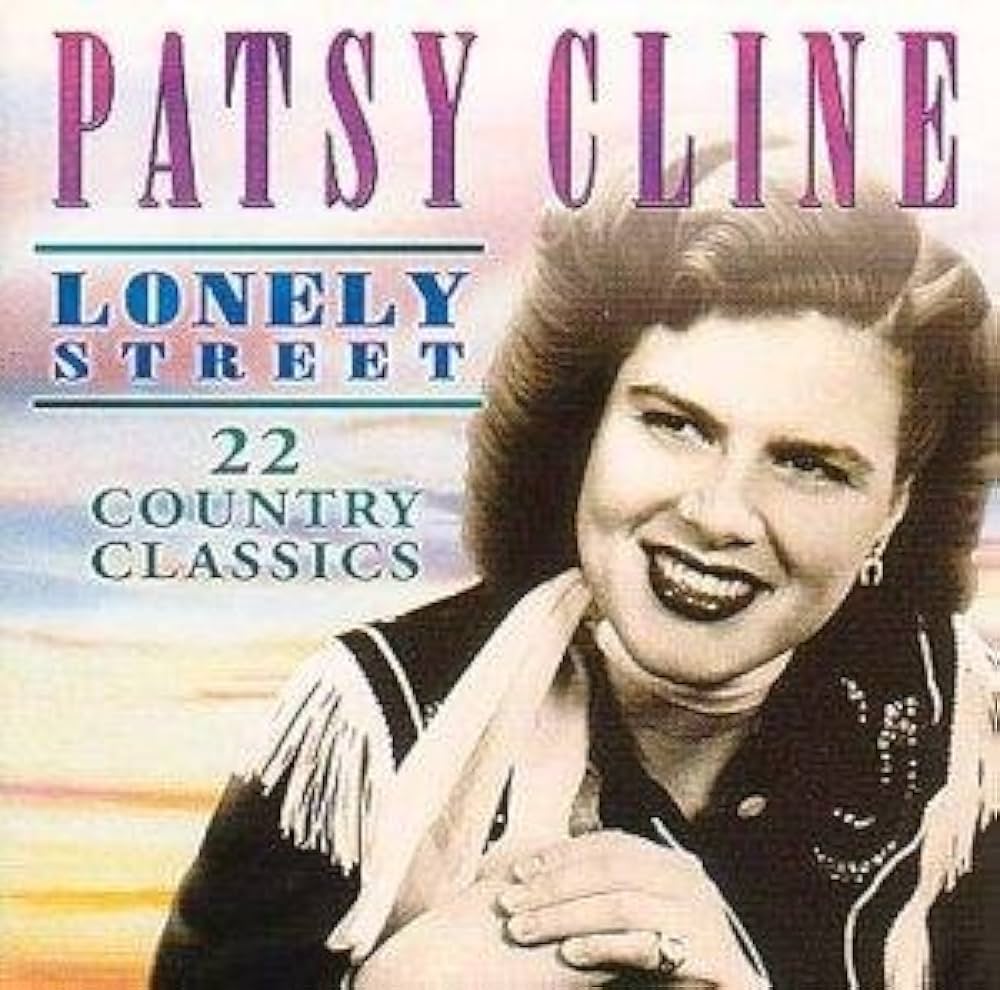
About The Song
“Lonely Street” is a track by American country singer Patsy Cline, recorded on January 27, 1960, at Bradley Film and Recording Studio in Nashville, Tennessee, during one of her early Decca sessions produced by Owen Bradley. The song is a cover of the 1956 country standard written by Carl Belew, W.S. Stevenson, and Kenny West, originally a hit for Carl Belew (number 2 on Billboard country chart in 1956) and later recorded by Andy Williams (1959 pop version). Cline’s rendition features her warm, melancholic vocals over a gentle, mid-tempo honky-tonk ballad arrangement with acoustic guitar, steel guitar, piano (likely Floyd Cramer), upright bass, and light backing—reflecting her transitional sound from traditional country to the emerging Nashville Sound that would define her major hits starting later in 1960. The track runs approximately 2:32 in duration.
The song was released as the B-side to the single “Lovesick Blues” on Decca Records (catalog 9-31061) on March 7, 1960. Neither side charted on the Billboard Hot Country Songs or pop charts, consistent with Cline’s output before her breakthrough crossover successes with “I Fall to Pieces” (1961) and “Crazy” (1961). “Lonely Street” later appeared on various posthumous compilations after her death in a plane crash on March 5, 1963, including Here’s Patsy Cline (1965 Vocalion), The Patsy Cline Story (1973), Walkin’ After Midnight: The Original Sessions Vol. 1 (2003), Patsy Cline’s Golden Hits (budget reissues), and archival collections such as Imagine That: The Lost Recordings (1954-1963) (2025 Elemental Music/Deep Digs). It has been reissued frequently in retrospectives emphasizing her early Decca recordings.
Musically, “Lonely Street” is a slow-to-mid-tempo country weeper with a straightforward, sorrowful arrangement that highlights Cline’s vocal phrasing and emotional depth. The lyrics describe a desolate emotional landscape (“I’m going down to Lonely Street / To the house that loneliness built”) and the pain of unrequited love or abandonment (“I’m gonna find the one who hurt me so / And tell him how it feels to be alone”). The song uses vivid imagery of a metaphorical street where broken hearts reside, conveying isolation, regret, and longing (“On Lonely Street, where the broken hearts go / That’s where I’ll go to cry”). Owen Bradley’s production keeps it simple yet poignant, allowing Cline’s voice to carry the heartache without heavy orchestration, making it a classic example of her early 1960s style before fuller string sections became prominent.
The track is part of Cline’s Decca catalog from 1960 onward, a prolific phase of around 50 masters that yielded her biggest hits before her tragic passing. While not a commercial success, “Lonely Street” exemplifies her mastery of sorrowful ballads and contributes to understanding her evolution toward national stardom. Posthumous reissues have kept the song in circulation, often grouped with other introspective or mournful tracks from the same period. Sources such as discographies, session logs, and Genius annotations confirm the January 27, 1960 recording date and March 1960 single release, highlighting its role in her transitional discography and enduring legacy as a pioneering female country vocalist who brought raw vulnerability and sophistication to themes of loneliness and heartbreak.
Video
Lyric
I’m going down to Lonely Street
To the house that loneliness built
I’m gonna live on Lonely Street
With loneliness for companyI’m gonna find the one who hurt me so
And tell him how it feels to be alone
I’m gonna walk down Lonely Street
And never come back homeOn Lonely Street, where the broken hearts go
That’s where I’ll go to cry
On Lonely Street, where the lonely ones know
How it feels to say goodbyeI’m going down to Lonely Street
To the house that loneliness built
I’m gonna live on Lonely Street
With loneliness for company