About The Song
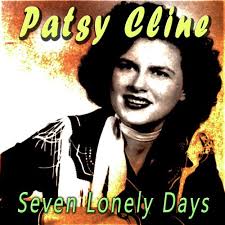
“Seven Lonely Days” is a track by American country singer Patsy Cline, recorded on April 24, 1957, at Bradley Film and Recording Studio in Nashville, Tennessee, during sessions for her debut album under the Four Star Records contract distributed through Decca Records. Produced by Owen Bradley, the song is a cover of the 1953 pop standard written by Alden Shuman, Marshall Brown, and Earl Shuman, originally a hit for Georgia Gibbs (number 5 on the Billboard pop chart in 1953) and later recorded by Gisele MacKenzie and Bonnie Lou. Cline’s version features her emotive, heartfelt vocals over a classic mid-1950s honky-tonk arrangement with steel guitar, fiddle, acoustic rhythm guitar, upright bass, and light piano—typical of her pre-Nashville Sound era (1955–1959) before the smoother, orchestral productions of her 1960s Decca hits.
The song was not released as a standalone single and did not chart on the Billboard Hot Country Songs or pop charts. It first appeared on her self-titled debut album Patsy Cline (Decca DL 8619, released August 5, 1957). During this period, Cline’s primary commercial success came from “Walkin’ After Midnight” (1957, peaking at number 2 country and 12 pop). “Seven Lonely Days” later appeared on various posthumous compilations after her death in a plane crash on March 5, 1963, including Here’s Patsy Cline (1965), The Patsy Cline Story (1973), Walkin’ After Midnight: The Original Sessions Vol. 1 (2003), Patsy Cline’s Golden Hits (budget reissues), and collections such as Imagine That: The Lost Recordings (various volumes). The track runs approximately 2:14 to 2:17 in duration and has been reissued frequently in retrospectives highlighting her early work.
Musically, “Seven Lonely Days” is a slow-to-mid-tempo country weeper with a straightforward, sorrowful arrangement that emphasizes Cline’s vocal phrasing and emotional delivery. The lyrics narrate a woman’s grief after being left by her lover, counting the days of loneliness and pleading for his return (“Seven lonely days make one lonely week / Seven lonely nights make one lonely me”). The song builds through verses that detail her sadness and hope (“Ever since the day you told me we were through / I’ve been lonely, oh so lonely, missing you”), culminating in a repeated, plaintive chorus. Owen Bradley’s production keeps it simple and authentic to the honky-tonk style, allowing Cline’s voice to carry the heartache without heavy instrumentation or overdubs.
The track is part of Cline’s extensive Four Star/Decca output of over 100 recordings from 1955 to 1960, a period constrained by contract obligations to record label-provided songs with limited commercial breakthroughs until her later Decca successes. While not a hit, “Seven Lonely Days” exemplifies the raw emotional power and storytelling style of her pre-stardom years. Posthumous reissues have kept the song in circulation, often grouped with other heartbreak ballads from her debut album. Sources such as discographies, session logs, and Genius annotations confirm the April 1957 recording date and its inclusion on Patsy Cline (1957), underscoring her legacy as a pioneering female country artist who brought profound vulnerability and authenticity to themes of loneliness and lost love in the traditional country era.
Video
Lyric
Seven lonely days make one lonely week
Seven lonely nights make one lonely me
Ever since the day you told me we were through
I’ve been lonely, oh so lonely, missing youOh my darling, you’re crying, boo-hoo-hoo-hoo
There’s no use in crying, I know it’s too late
But I still love you, dear, and I always willSeven lonely days make one lonely week
Seven lonely nights make one lonely me
Ever since the day you told me we were through
I’ve been lonely, oh so lonely, missing youOh my darling, you’re crying, boo-hoo-hoo-hoo
There’s no use in crying, I know it’s too late
But I still love you, dear, and I always will