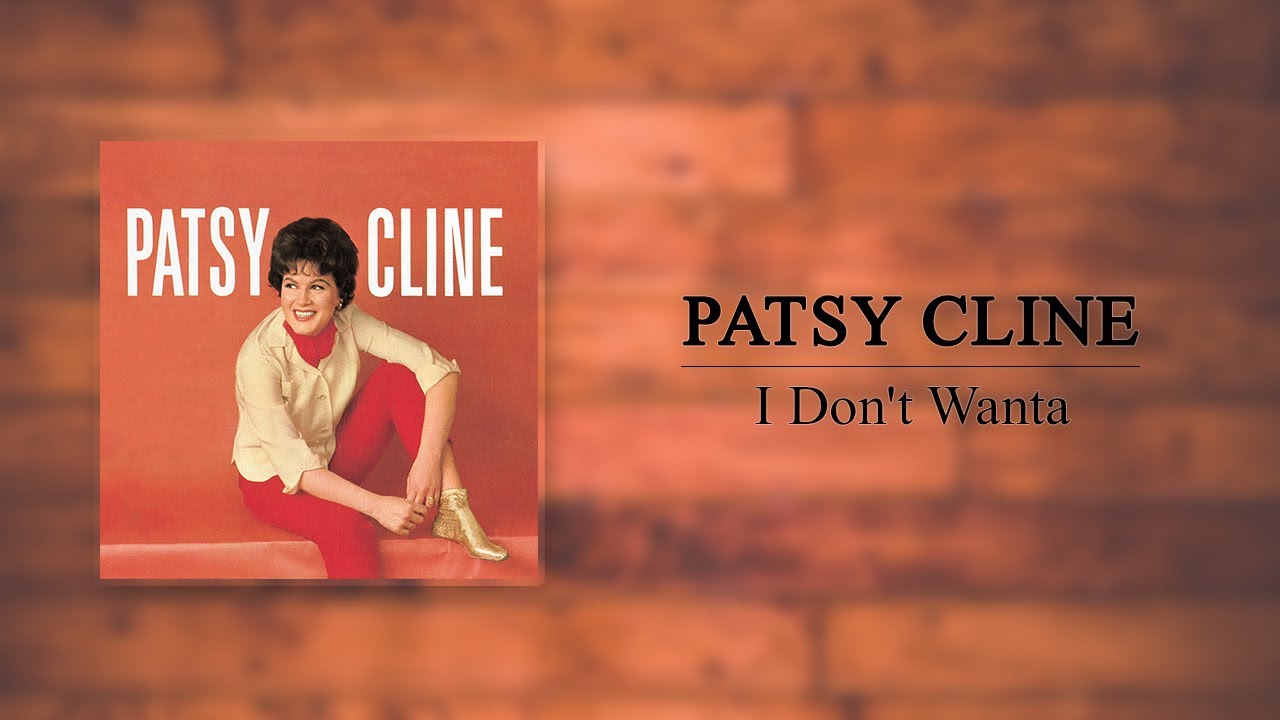
About The Song
“I Don’t Wanta” (also stylized as “I Don’t Wanna” in some references) is a track by American country singer Patsy Cline, featured on her self-titled debut studio album, Patsy Cline, released on August 5, 1957, by Decca Records. The song was recorded during sessions in 1956–1957 at Bradley Film and Recording Studio in Nashville, Tennessee, under producer Owen Bradley. An earlier take dates to January 5, 1956, but the released version is a re-recording from late 1957 with a more upbeat, doo-wop-influenced rockabilly/rocker arrangement. Songwriting credits are shared by Eddie Miller, W.S. Stevenson, and Durwood Haddock. This period marked Cline’s early Four Star Records contract phase, where she was required to record primarily material from the label’s catalog before transitioning to greater creative input at Decca.
The song was released as a single in November 1957 by Decca (catalog 9-30504), backed with “Then You’ll Know” as the B-side. It did not chart on the Billboard Hot Country Songs or pop charts, failing to capitalize on the momentum from her breakthrough hit “Walkin’ After Midnight” (which reached number 2 country and 12 pop earlier in 1957). The track runs approximately 2:17 to 2:24 across releases. It appeared on the Patsy Cline album and later on numerous posthumous compilations, including Here’s Patsy Cline (1965), A Legend (1964 Everest reissue), More of the Legendary Patsy Cline (1991), and various budget collections like Today, Tomorrow And Forever – 20 Classics (1976 Gusto) and Four Star Years anthologies. Re-releases also occurred on Everest singles in 1962 (paired with “I Can’t Forget”) and in digital/streaming formats.
Musically, “I Don’t Wanta” is an upbeat, light-hearted country-rocker with doo-wop backing vocals (including oohs and group harmonies), acoustic guitar, and a lively rhythm section—contrasting with some of Cline’s more traditional honky-tonk ballads from the era. The lyrics express playful dependency in love: refusing to walk, talk, be lonesome, or be blue without a partner, with repetitive “ooh, you” hooks and a catchy, flirtatious tone. Produced by Owen Bradley, it reflects attempts to experiment with crossover appeal amid Cline’s pre-Nashville Sound style (1955–1959), before her polished pop-country hits starting in 1960. The track is part of her catalog of over 100 recordings from the Four Star/Decca years, many of which saw limited success until posthumous revivals.
Additional details include its inclusion in promotional EPs like Decca EP-25 (1957 promo with “Stop the World,” “Then You’ll Know,” “Too Many Secrets,” and “I Don’t Wanta”) and retrospective packages emphasizing her early work. While critics and discographies note the performance as somewhat lackluster compared to her signature emotional ballads, it showcases versatility in upbeat material. The song did not achieve commercial impact but contributes to understanding Cline’s transitional phase toward stardom. Following her death in a March 5, 1963 plane crash, it has been reissued frequently in compilations, highlighting her enduring legacy as a key figure in country music who bridged honky-tonk roots with broader appeal.
Video
Lyric
(Ooh, you)
(Ooh, you)
(Ooh, you)Don’t wanna walk unless I’m walkin’ with you
Don’t wanna talk unless I’m talkin’ to you
Don’t wanna be lonesome, don’t wanna be blue
Baby, I don’t wanna, ‘less it’s with youDon’t wanna eat unless I’m eatin’ with you
Don’t wanna sleep unless I’m sleepin’ with you
Don’t wanna live, don’t wanna die
Baby, I don’t wanna, ‘less you’re by my side(Ooh, you)
(Ooh, you)
(Ooh, you)Don’t wanna laugh unless I’m laughin’ with you
Don’t wanna cry unless I’m cryin’ with you
Don’t wanna do anything I do
Baby, I don’t wanna, ‘less it’s with you